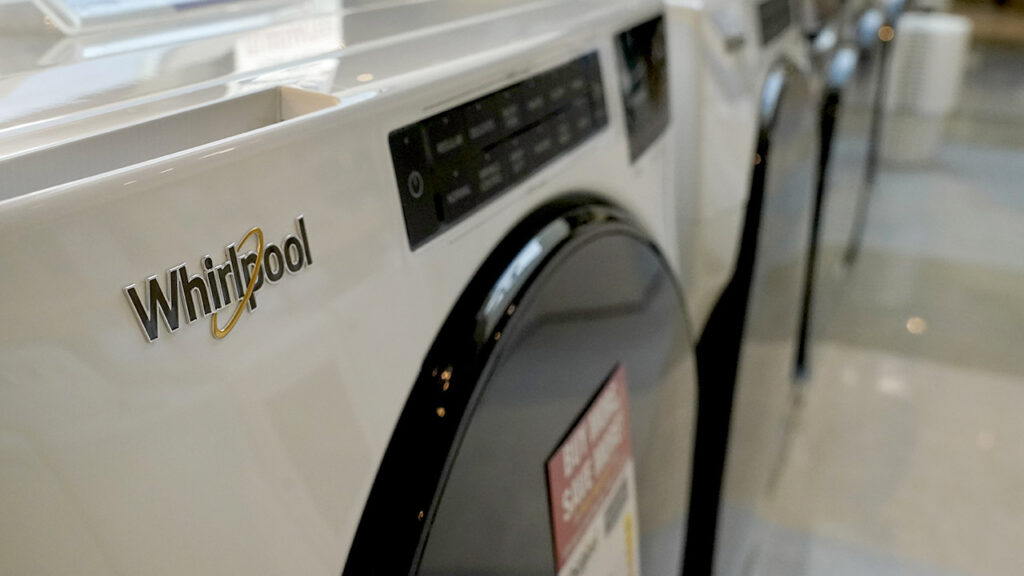
Whirlpool Stock: Tariff-Protected Turnaround Ready for the Housing Recovery (2025–2027)
Whirlpool stock is drawing renewed attention from investors because it sits at the intersection of tariff protection, a multi-year operational turnaround, and a coming recovery in U.S. housing demand as interest rates gradually decline. With these forces aligning, Whirlpool stock may be positioned for a stronger performance through the 2025–2027 economic cycle.
Whirlpool Corporation is not usually viewed as a macro bellwether. It makes refrigerators, washers, dryers, dishwashers, and the small appliances people use every day. But in 2025, Whirlpool stock sits at the intersection of three huge economic forces:
-
A new era of U.S. tariffs that structurally raise costs for imported appliances
-
A multi-year Whirlpool turnaround focused on U.S. production, premium products, and cost efficiency
-
A gradual decline in interest rates that will eventually re-ignite the U.S. housing market and appliance demand
When you combine tariff protection, operational discipline, and a coming housing recovery, Whirlpool suddenly becomes a high-beta reopening of the home goods cycle—without requiring speculative assumptions.
This article breaks down why investors are increasingly bullish on Whirlpool, why the stock is insulated from tariff shocks, and why lower interest rates may turn a beaten-down manufacturer into a surprisingly powerful cyclical opportunity.
Why Whirlpool Stock Is Structurally Protected From U.S. Tariffs
The U.S. has shifted toward long-term protectionism. Tariffs on Chinese goods remain in place. Section 301, anti-dumping, and safeguard duties all continue to impact imported home appliances.
The result?
-
Imported washers and dryers have plunged in volume.
-
Foreign competitors face unpredictable landed costs.
-
Retailers increasingly prefer U.S.-based manufacturers for reliability and pricing stability.
In this environment, Whirlpool is not just surviving—it is structurally advantaged.
Whirlpool Produces Where It Sells — a Massive Advantage in a Tariff-Heavy World
Here’s where the bullish case begins:
-
Roughly 80% of Whirlpool’s production occurs in the United States.
-
The company operates 10 major manufacturing plants across the U.S.
-
Whirlpool has publicly committed to $300 million in U.S. facility upgrades, especially in Ohio.
-
After exiting most of Europe, Whirlpool now earns nearly 90% of revenue from the Americas.
This domestic footprint matters enormously for investors because:
-
Whirlpool pays far fewer tariffs on finished goods, unlike LG and Samsung.
-
Retailers trust Whirlpool’s domestic supply chain during disruptions.
-
Tariff volatility disproportionately hurts Whirlpool’s foreign rivals—not Whirlpool itself.
This is the definition of tariff insulation.
Short-Term Tariff Pain Doesn’t Change the Long-Term Competitive Shift
To be objective: Whirlpool still pays hundreds of millions in tariffs on imported components. These aren’t trivial. They have pressured margins in 2024–2025.
But this pain is transitional, not structural.
Why?
Because competitors that tried to “flood” the U.S. with pre-tariff imports created temporary price distortion. Whirlpool management has already stated that as these inventories clear, the pricing environment should normalize—leaving Whirlpool in a far stronger competitive position than before.
In plain English:
Tariffs hurt Whirlpool today, but they hurt Whirlpool’s competitors every day going forward.
That asymmetry is the core of the bullish tariff thesis.
How the Whirlpool Stock Turnaround Strengthens Future Margins
Over the last two years, Whirlpool has executed one of the most under-the-radar turnarounds in the consumer durables sector.
Key achievements:
-
$300 million in structural cost reductions already completed
-
Another $200 million targeted in 2025
-
Exit from Europe, eliminating a historically low-margin and capital-intensive region
-
Refocus on North America, the company’s highest-margin, highest-brand-equity market
This is not the Whirlpool of five years ago. It is smaller, tighter, and much more strategically aligned with U.S. demand cycles.
Premium Brands Like KitchenAid Are Doing the Heavy Lifting
While core appliances remain cyclical, Whirlpool’s premium and small-appliance franchises are outperforming:
-
KitchenAid countertop appliances are posting double-digit revenue growth.
-
Higher-margin small domestic appliances (mixers, blenders, accessories) are gaining retail floor space.
-
Retailers are requesting more premium inventory because the categories drive better ticket sizes.
This is important for the bullish case because:
-
Premium brands expand margins.
-
SDA categories are less cyclical than washers and refrigerators.
-
These products respond better to consumer income growth than to housing turnover.
In other words: Whirlpool’s fastest-growing segment is not housing-dependent at all.
2025 Guidance Is Conservative, Which Creates Realistic Upside
Whirlpool expects:
-
~5% EBIT margins
-
~$7 in ongoing EPS
-
Muted revenue growth due to housing weakness and tariff pressure
But here’s the key:
Even in a difficult macro environment, Whirlpool is still generating meaningful EPS and positive free cash flow, all while:
-
Cutting structural costs
-
Improving product mix
-
Streamlining manufacturing
-
Reducing exposure to volatile foreign markets
If Whirlpool can deliver $7 EPS in a bad year, the runway in a normal or strong housing year is much higher.
This is why analysts who understand cyclicals consider Whirlpool a turnaround in progress—not a value trap.
Why Falling Interest Rates Could Be a Major Catalyst for Whirlpool Stock
Interest rates dictate the health of:
-
Home purchases
-
Renovations
-
Residential investment
-
Consumer willingness to replace big-ticket items
After holding rates at extremely restrictive levels through 2023–2024, the Federal Reserve has already begun cutting. Mortgage rates, which peaked above 7%, are drifting toward the high-5% to low-6% range over the next year based on most major forecasts.
This matters because the biggest freeze in the appliance market has been caused by:
-
Low inventory
-
High mortgage rates
-
Homeowners locked into 3% loans
-
Collapsing mobility
As rates decline, this paralysis begins to break.
Whirlpool Stock and the 2025–2027 Housing Recovery Outlook
Every home sale includes:
-
New refrigerators
-
New dishwashers
-
New ranges
-
New washers and dryers
-
New built-ins and ventilation systems
Even small movements in home sales volume translate into significant appliance growth.
If mortgage rates move from the mid-6s into the high-5s, economists estimate:
-
Home sales could rise 10–20%
-
Remodeling activity could climb
-
Replacement cycles accelerate as consumer budgets improve
For Whirlpool, this is a highly levered demand catalyst.
Whirlpool Doesn’t Need a Housing Boom — It Only Needs “Normalization”
This is a key point for investors:
Whirlpool is not priced for optimism. It’s priced as if housing will remain frozen and tariffs will crush margins indefinitely.
But Whirlpool’s business model does not require a housing boom.
It only requires:
-
Slightly lower mortgage rates
-
Improved affordability
-
Normal turnover levels
-
Stable consumer credit conditions
A gradual rate-cut cycle—even a cautious one—supports all of those factors.
If the housing market returns to even 70–80% of normal historic activity, Whirlpool’s volumes begin to rise, margins expand, and earnings recover substantially.
4. The Bullish Whirlpool Thesis: A Tariff-Protected, Multi-Catalyst Recovery Setup
Here is the bullish case in its cleanest, SEO-optimized form—ideal for a MacroHint audience researching “Is Whirlpool stock a buy?” or “Whirlpool stock forecast 2025–2027.”
Catalyst #1: Whirlpool Benefits From Long-Term U.S. Tariffs
-
Tariffs raise costs for foreign competitors
-
U.S. manufacturing footprint insulates Whirlpool
-
Domestic retailers prefer stable, tariff-proof suppliers
-
Long-term trend toward reshoring supports Whirlpool’s investments
Tariffs compress margins today, but protect market share tomorrow.
Catalyst #2: Whirlpool’s Turnaround Reduces Costs and Lifts Margins
-
Exiting Europe removed a low-margin drag
-
Cost take-out is structural, not temporary
-
SDA and premium categories are growing faster than core appliances
-
New product launches are driving floor-space gains at major retailers
The company is becoming leaner just as the macro cycle turns.
Catalyst #3: Falling Interest Rates Will Wake Up the Housing Market
-
Housing turnover is the #1 driver of appliance sales
-
Mortgage rates are drifting down as the Fed eases
-
Even modest declines unlock remodeling budgets
-
Volume recovery generates margin leverage from a lower cost base
Whirlpool is a direct, high-beta way to express a housing recovery trade.
Catalyst #4: Whirlpool’s Valuation Bakes in Too Much Pessimism
Right now the stock trades like:
-
Tariffs will worsen indefinitely
-
Housing will stay frozen forever
-
Consumers will permanently defer big-ticket purchases
-
The turnaround won’t move margins
But the underlying fundamentals tell a very different story:
-
Whirlpool is profitable even in weak conditions
-
Free cash flow remains positive
-
The dividend is supported
-
Debt metrics improve as earnings normalize
If earnings move from $7 to even $10–$12 over the next cycle (still below historic peaks), Whirlpool becomes dramatically undervalued.
Catalyst #5: Whirlpool Is Perfectly Positioned for a Slow, Orderly Fed Easing Cycle
Unlike speculative tech or unprofitable growth companies, Whirlpool does not need rates to crash.
It benefits from slow, predictable easing:
-
Lower mortgage rates
-
Better affordability
-
Higher household formation
-
Normal appliance replacement cycles
This is the exact environment most economists expect from 2025 to 2027.
Frequently Asked Questions About Whirlpool Stock
Is Whirlpool stock a good investment in 2025?
Whirlpool stock may be attractive for long-term investors because it is insulated from foreign tariffs, benefiting from domestic manufacturing advantages, while also participating in a major operational turnaround. Its performance is closely tied to U.S. housing-market activity, which should gradually improve as interest rates decline.
How do tariffs impact Whirlpool stock?
Tariffs increase costs for imported appliances, giving Whirlpool—one of the most U.S.-based manufacturers in the industry—a significant competitive edge. While component tariffs create short-term margin pressure, long-term tariff policy strengthens Whirlpool’s relative market share.
Will falling interest rates boost Whirlpool stock?
Yes. Whirlpool’s sales are directly tied to housing mobility, renovation spending, and consumer big-ticket purchases. As mortgage rates decline, home sales and appliance replacements historically rise, creating a strong tailwind for Whirlpool stock.
What are the main risks to Whirlpool stock?
Key risks include elevated short-term tariff costs, a slower-than-expected housing recovery, competitive pricing pressure from foreign brands, and Whirlpool’s cyclical exposure to consumer spending and mortgages.
Is Whirlpool stock undervalued right now?
Many analysts consider Whirlpool undervalued relative to its long-term earnings potential. Its cost reductions, premium brand mix (such as KitchenAid), and eventual housing-market recovery could justify a higher valuation as macro conditions normalize.
Conclusion: Whirlpool Stock Is a Classic Out-of-Favor Value Play With Real Macro Tailwinds
The combination of tariff insulation, operational turnaround, and an impending housing demand rebound creates one of the more compelling contrarian setups in the market.
Here’s the reality:
-
Whirlpool is not a momentum story.
-
It is not a fad.
-
It will not rally because of AI or hype.
It will rally because:
-
Tariffs protect its U.S. footprint.
-
Costs are structurally lower.
-
Premium brands like KitchenAid are growing.
-
Rates are falling.
-
Housing will eventually unfreeze.
And Whirlpool’s earnings power in a normalized environment is meaningfully higher than what the market is pricing in today.
For investors seeking a value stock with macro leverage, Whirlpool may be one of the smartest ways to play the next stage of the U.S. economic cycle.
DISCLAIMER: This analysis of the aforementioned stock security is in no way to be construed, understood, or seen as formal, professional, or any other form of investment advice. We are simply expressing our opinions regarding a publicly traded entity.
© 2025 MacroHint.com. All rights reserved